
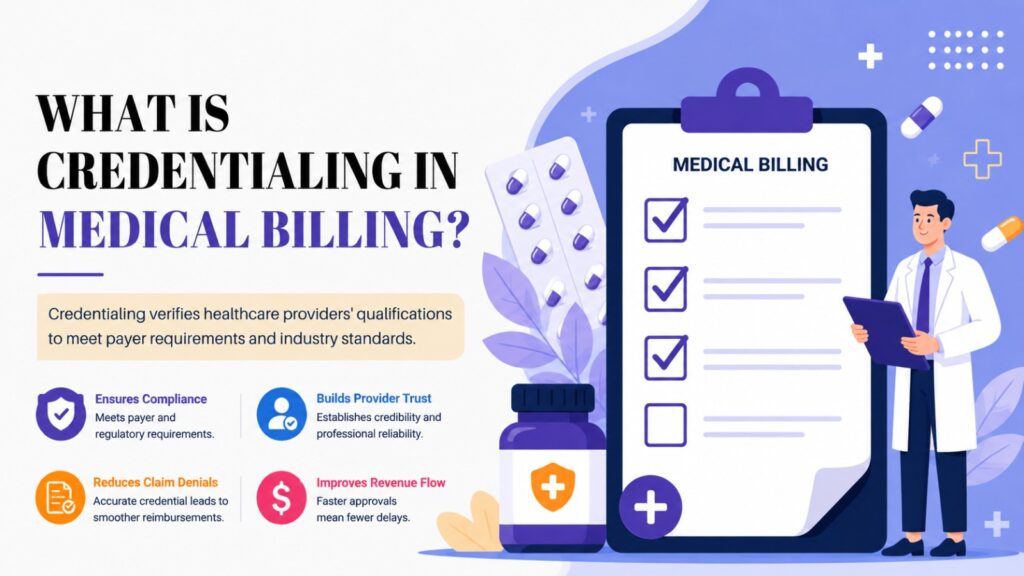
What Is Credentialing in Medical Billing?
Medical billing credentialing is the process of verifying a healthcare provider’s qualifications and enrolling them with insurance companies and other payers. It ensures that providers meet the necessary professional, regulatory, and payer-specific requirements before they can receive reimbursement for the services they provide.
For healthcare organizations, credentialing is an essential step in maintaining compliance, building trust, and ensuring a smooth revenue cycle.
Why Is Credentialing Important in Medical Billing?
Credentialing helps insurance companies confirm that healthcare providers are properly qualified to deliver medical services. The process typically involves reviewing a provider’s education, licenses, certifications, work history, malpractice coverage, and other professional information.
Once credentialing is completed, providers can become participating members of insurance networks and submit claims for covered services.
1. Ensures Compliance
Credentialing helps healthcare providers meet payer and regulatory requirements. Keeping credentials accurate and up to date reduces the risk of compliance issues and interruptions in billing.
2. Builds Provider Trust
A properly credentialed provider demonstrates that they have met established professional standards. This helps strengthen confidence among patients, insurance companies, and healthcare organizations.
3. Reduces Claim Denials
Incorrect or incomplete provider information can contribute to claim denials. Accurate credentialing helps ensure that provider details, licenses, specialties, and payer enrollment information are properly documented.
4. Improves Revenue Flow
When providers are correctly credentialed and enrolled, claims can move through the reimbursement process more efficiently. This can reduce payment delays and support a healthier medical billing revenue cycle.
What Does the Credentialing Process Include?
Although requirements vary by payer and provider type, medical billing credentialing commonly includes:
* Verification of professional licenses
* Education and training verification
* Board certification verification
* Work history review
* Malpractice insurance verification
* NPI and provider information validation
* Payer enrollment and participation
* Ongoing credential monitoring and recredentialing
Credentialing and Medical Billing: How Are They Connected?
Credentialing and medical billing are closely connected. Even when a healthcare provider delivers a service correctly, reimbursement can be delayed or denied if the provider is not properly credentialed or enrolled with the relevant payer.
For this reason, healthcare organizations should treat credentialing as an ongoing process rather than a one-time administrative task. Regularly reviewing provider information and renewing credentials can help prevent disruptions in claims and
Final Thoughts
Medical billing credentialing plays a vital role in healthcare revenue management. It verifies provider qualifications, supports payer compliance, reduces avoidable claim issues, and helps maintain consistent reimbursement.
By maintaining accurate credentialing records and staying current with payer requirements, healthcare organizations can create a more reliable billing process while allowing providers to focus on delivering quality patient care.