
Medical Coding & Medical Billing: Understanding the Difference and Why They Matter
The healthcare industry involves much more than diagnosing and treating patients. Behind every doctor’s visit, medical procedure, and prescription, there is an important administrative process that ensures healthcare services are accurately documented, coded, and billed. Medical coding and medical billing are two essential components of this process.
Although these terms are often used together, they have different roles. Understanding how they work together can help healthcare providers maintain accurate records, reduce billing errors, and improve revenue cycle management.
What Is Medical Coding?
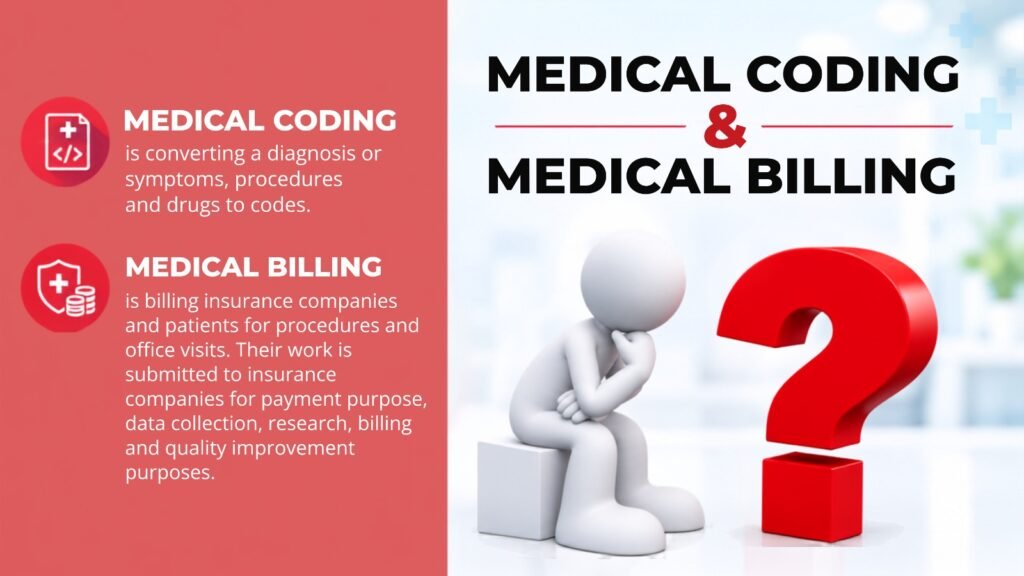
Medical coding is the process of converting healthcare information into standardized medical codes.
When a patient visits a healthcare provider, their medical record may contain information about:
- Diagnoses and symptoms
- Medical procedures and treatments
- Laboratory tests
- Medications and drugs
- Healthcare services provided
Medical coders review this documentation and translate the relevant information into standardized codes used for healthcare records, insurance claims, reporting, and data analysis.
Why Is Medical Coding Important?
Accurate coding helps ensure that the services provided to patients are properly documented and represented. It can support:
- Accurate medical records
- Proper insurance claim submission
- Consistent healthcare data
- Regulatory and compliance requirements
- Healthcare research and analysis
- Better communication between healthcare organizations
Even a small coding error can potentially result in claim delays, denials, or incorrect reimbursement.
What Is Medical Billing?
Medical billing is the process of preparing and submitting claims to insurance companies or patients for healthcare services provided.
Once medical services have been documented and coded, medical billers use this information to prepare claims and submit them to the appropriate payer.
The billing process may involve:
- Reviewing patient and insurance information
- Checking coded medical services
- Preparing and submitting insurance claims
- Following up on unpaid or denied claims
- Posting payments and adjustments
- Managing patient balances
- Supporting the overall revenue cycle
The goal is to help healthcare providers receive appropriate reimbursement for the services they provide.
Medical Coding vs. Medical Billing
While coding and billing work closely together, their responsibilities are different.
Medical Coding Medical Billing
Converts clinical documentation into standardized codes Uses coded information to prepare claims
Focuses on diagnoses, procedures, and services Focuses on claims, payments, and reimbursement
Reviews medical records Communicates with payers and patients
Supports accurate documentation and reporting Supports the healthcare revenue cycle
In simple terms:
Medical Coding = Translating healthcare services into codes
Medical Billing = Using those codes to submit claims and obtain payment
How Medical Coding and Billing Work Together
Medical coding and billing are connected steps within the healthcare revenue cycle.
For example, when a patient visits a healthcare provider, the provider documents the diagnosis and services performed. A medical coder reviews that documentation and assigns the appropriate codes. The medical biller then uses the coded information to prepare and submit the claim to the insurance company.
If the claim is processed successfully, the healthcare provider receives reimbursement according to the applicable payer and patient coverage.
This collaboration makes accuracy and proper documentation extremely important.
The Importance of Accurate Medical Coding & Billing
Effective coding and billing can help healthcare organizations improve their administrative and financial processes.
Benefits may include:
- Fewer billing errors
- Reduced claim denials
- Timely claim submission
- Improved reimbursement processes
- Better documentation
- More efficient revenue cycle management
- Reliable healthcare data for reporting and research
- Medical Coding & Medical Billing: Two Essential Healthcare Functions
Medical coding and medical billing may have different responsibilities, but they share the same goal: supporting an accurate and efficient healthcare revenue cycle.
Medical coding translates clinical information into standardized codes, while medical billing uses that information to manage claims and payments.
When both processes are handled accurately and efficiently, healthcare organizations can spend less time dealing with administrative issues and more time focusing on delivering quality patient care.
Final Thoughts
Medical Coding & Medical Billing work hand in hand.
From documenting a patient’s diagnosis to submitting an insurance claim and receiving reimbursement, every step matters. Accurate coding, proper billing, and efficient claim management can contribute to a smoother healthcare revenue cycle and better operational performance.
Accurate Coding. Efficient Billing. Better Revenue Cycle.